Skip to content
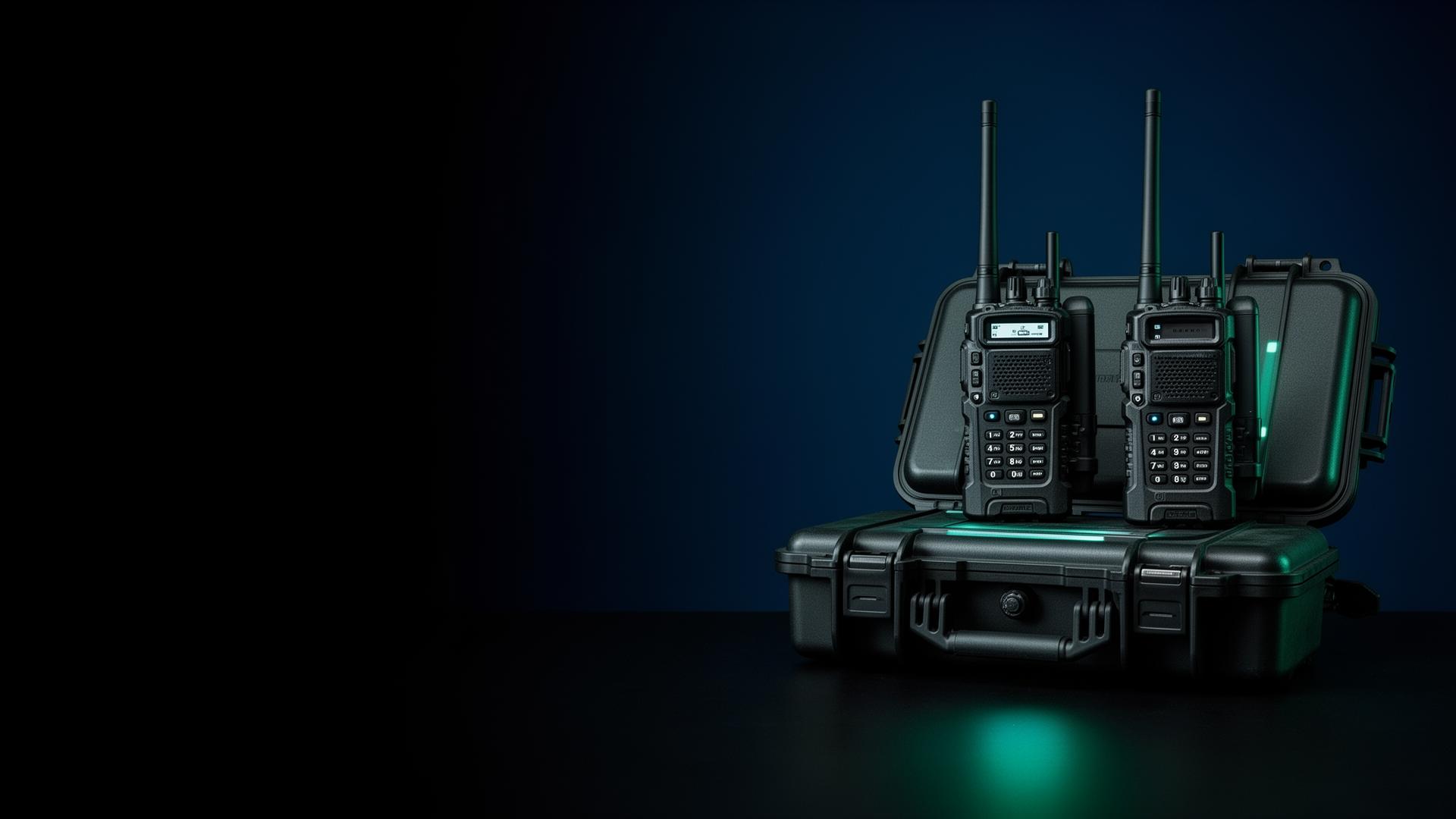
    Hardened encrypted communications equipment — secure radio handsets and tactical comms case
    Back to HomeCapability

    Secure
    Communication

    Private comms infrastructure for sensitive operations. Encrypted endpoints, hardened devices, RF-shielded spaces, satellite links, and the tradecraft to operate them under pressure.

    When Standard Comms Become Exposure

    For most organisations, off-the-shelf communications suffice. For some — governmental field ops, principals operating against motivated adversaries, legal-privileged exchanges — they create exposure. The default phone, the default email, the default video call: each is a known interception surface.

    Mission Support designs, deploys, and manages secure communication programmes for clients whose information has consequence. We operate across encrypted endpoints, hardened devices, RF-shielded environments, and sat-comms paths — chosen and integrated for the threat, not catalogued from a brochure.

    Tradecraft is the unlock. Hardware without discipline is theatre. We train the people who use the kit and we manage the programme as a living capability.

    Capabilities

    • End-to-end encrypted voice, messaging, and file-sharing endpoints
    • Hardened mobile and laptop devices, sanitised baseline configurations
    • RF-shielded enclosures and TEMPEST-considered build-outs for sensitive briefings
    • Satellite communications for off-grid and contested environments
    • Tradecraft training — operating procedures, OPSEC discipline, counter-surveillance
    • Lifecycle management — issue, monitor, rotate, decommission

    Lifecycle

    Phase 01

    Assess

    We profile the threat: who is targeting your communications, with what capability, and to what end. We map exposure across people, devices, networks, physical spaces, and behaviours.

    Phase 02

    Procure

    We specify and procure the right hardware and platforms — vetted endpoints, hardened devices, and infrastructure matched to your jurisdiction and operational pattern.

    Phase 03

    Deploy

    Devices are provisioned, networks segmented, secure spaces commissioned, and personnel trained. Tradecraft is built into operating procedure, not bolted on.

    Phase 04

    Manage

    Continuous monitoring, periodic rotation, key management, and ongoing tradecraft drills. We treat secure communications as a programme, not a product.

    Who We Build For

    Governmental and ministerial field operations
    Executive principals operating in elevated-risk environments
    Legal-privileged and board-level communications
    Embassy and diplomatic-mission internal and external comms
    Crisis-response and continuity-of-operations programmes

    How Communications Get Compromised

    Understanding the attack surface is the prerequisite for specifying the right protection. Four vectors account for the majority of sensitive communications compromises in the environments Mission Support operates.

    Endpoint Compromise

    Malware installed on the device reads messages before encryption and after decryption. A compromised endpoint defeats encryption entirely — the adversary does not attack the channel, they own the source. This is the most common failure mode against sophisticated adversaries.

    RF Interception

    Passive monitoring of wireless communications — cellular, Wi-Fi, Bluetooth, legacy SATCOM — can be conducted from distance with commercially available equipment. No physical access to the device or network is required. Range and capability scale with adversary investment.

    Network and Gateway Attacks

    Traffic traversing unprotected networks or infrastructure controlled or compromised by the adversary can be captured and, where encryption is absent or weak, decoded. Gateway-level interception has been documented across multiple commercial communication platforms.

    Physical and Human Access

    The most reliable adversary capability is access: to the space where conversations occur, to a person with access, or to the device outside the owner's control. Technical protection has hard limits when human and physical security are not layered alongside it.

    Technology Stack — What Each Layer Does

    Encrypted Endpoints

    Hardened mobile and laptop devices running managed, sandboxed environments with only vetted applications installed. Device baseline is stripped of default attack surface — manufacturer bloatware, unused services, uncontrolled update paths. Encryption is implemented end-to-end at the application layer, not assumed from network-level HTTPS.

    TEMPEST & RF Shielding

    Faraday-cage rooms or TEMPEST-treated spaces attenuate electromagnetic emanations from electronic equipment, preventing reconstruction of processed data from intercepted RF signals. Mission Support specifies shielding at the level demanded by the threat — procedural controls for lower-risk environments, full build-out where adversary TEMPEST capability is active.

    Satellite Communications

    Off-grid or contested-environment operations require comms paths independent of local telecommunications infrastructure, which may be monitored, controlled, or disrupted by the adversary. Mission Support deploys encrypted SATCOM with end-to-end encryption at the application layer, managed key infrastructure, and periodic rotation on a programme basis.

    Lifecycle Management

    Secure communications decay without management. Key material ages. Devices accumulate exposure. Threat pictures evolve. Mission Support treats the programme as a managed capability: periodic rotation, key renewal, compliance audits, and tradecraft refreshers built into the contract, not sold as add-ons.

    Frequently Asked Questions

    What is secure communication?

    Secure communication is the use of purpose-built hardware, software, and operational discipline to protect sensitive information in transit — voice, data, and messaging — from interception, monitoring, or exfiltration. Mission Support designs, deploys, and lifecycle-manages secure communications programmes for clients whose information carries operational, legal, or governmental consequence.

    What does Mission Support's secure communications service include?

    The service spans assessment, procurement, deployment, and ongoing management. Capabilities include end-to-end encrypted voice and messaging, hardened mobile and laptop devices, RF-shielded enclosures and TEMPEST-considered build-outs, satellite communications for off-grid or contested environments, tradecraft training for operators, and full lifecycle management — issue, monitoring, key rotation, and secure decommission.

    Who needs a secure communications programme?

    Organisations whose communications represent a high-value interception target: governmental and ministerial field operations, executive principals operating under specific threat, legal-privileged and board-level exchanges, embassy and diplomatic mission internal and external communications, and crisis-response or continuity-of-operations programmes. If the information has consequence, the channel requires assessment.

    How is a secure communications programme scoped?

    Every engagement begins with a threat assessment: who is targeting your communications, with what capability, and to what end. Mission Support maps exposure across people, devices, networks, physical spaces, and behaviours — then specifies hardware, platforms, and operating procedures matched to that threat picture. Pricing is on request; no standard packages are published.

    What is TEMPEST shielding and when is it required?

    TEMPEST is a NATO/NSA specification covering unintentional electromagnetic emanations from electronic equipment — signals that can be intercepted and used to reconstruct processed data. TEMPEST-considered environments are built or retrofitted to attenuate these emanations below detectable thresholds. Requirements arise wherever classified or sensitive processing occurs in proximity to a capable threat actor: embassy secure conference rooms, ministerial briefing facilities, legal counsels' offices in contested jurisdictions, and executive command centres in hostile environments. Mission Support assesses whether TEMPEST risk is live in your environment and specifies the appropriate counter-measure level — from procedural controls to full shielded-room build-out — matched to threat rather than certification for its own sake.

    How secure are commercial encrypted messaging apps for sensitive operations?

    Commercial end-to-end encrypted messaging applications — Signal, WhatsApp, and similar — provide meaningful protection against passive interception but fail against adversaries capable of compromising the endpoint device. If the phone is compromised, the encryption is irrelevant — the adversary reads messages as the user reads them. For operations where the adversary has device-access capability — state-level actors, hostile intelligence services, sophisticated criminal organisations — a managed hardened endpoint with controlled application environment and periodic device rotation is the correct specification. Mission Support assesses the threat before specifying the platform.

    What is OPSEC and why does it matter for communications security?

    OPSEC — Operations Security — is the discipline of identifying information that matters to an adversary and controlling it across all channels, not just the obvious ones. Communications security without OPSEC discipline fails because the adversary does not need to crack the encryption if they can observe metadata, timing patterns, social graphs, or physical behaviour that reveals the same information. Mission Support embeds OPSEC discipline into every programme: operating procedures are written with OPSEC analysis, personnel are trained to execute them under pressure, and lifecycle management includes periodic OPSEC reviews as the threat picture evolves.

    Can satellite phones be intercepted?

    Legacy satellite phone communications — particularly those operating on certain commercial SATCOM networks — have documented interception vulnerabilities at both the radio link and the terrestrial gateway. Mission Support specifies secure satellite communications that address known interception vectors: encrypted voice and data over SATCOM paths where end-to-end encryption is implemented at the application layer, not assumed from the network, with managed key infrastructure and periodic rotation. Sat-comms are deployed as part of a programme, not as a standalone product.

    What does a secure briefing room require?

    A secure briefing or conference facility requires physical access control, acoustic attenuation preventing audio leakage through walls, ceiling, and HVAC, TEMPEST attenuation or at minimum a TEMPEST risk assessment, a device policy preventing the introduction of recording equipment, and a commissioning inspection before sensitive discussions occur. Mission Support designs and builds secure facility solutions at the specification level appropriate to the threat — from a procedurally-hardened conference room in a lower-risk environment to a full shielded build-out where adversary TEMPEST capability is live.

    Is communications security training included in the programme?

    Yes, and it is non-negotiable. Hardware and infrastructure without operating discipline produce an illusion of security rather than actual protection. Mission Support builds tradecraft training into every programme deployment: personnel receive operating procedure briefings tailored to the specific kit deployed, OPSEC discipline training relevant to their role, counter-surveillance awareness for communications patterns, and periodic refresher drills. We write the operating procedures, deliver the training, and assess compliance as part of lifecycle management.

    CBRN Defence Training

    Secure communications and CBRN response are the two capabilities that most often gap out during complex multi-domain incidents. Mission Support trains both. Four-level curriculum, developed by operators with real-world CBRN experience.

    View CBRN Curriculum

    Request a Secure-Comms Consultation

    We will scope an assessment, scope the deployment, and outline the programme. Discreet by default.

    Contact Us